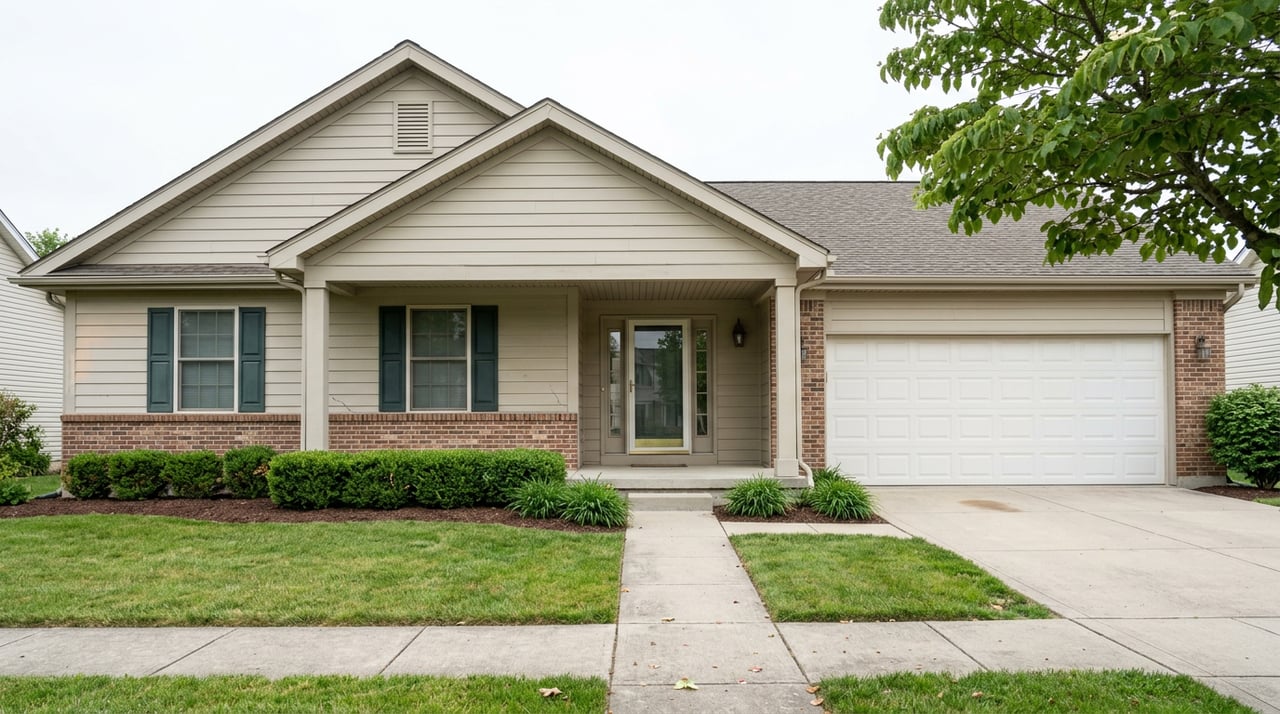
Why Your Oak Grove Closing Won't Look Like Your Last One
August 13, 2026
August 13, 2026
If you've already closed on a house once, somewhere on the Tennessee side of Fort Campbell, you carry a mental picture of what closing day looks like. You sit down at a title company. Someone slides a stack of documents across the table. You sign, you hand over a cashier's check, you walk out with keys inside an hour. No attorney needed anywhere in that room.
Carry that picture two miles down the road into Oak Grove and it stops matching what actually happens. The moment your contract crosses into Kentucky, the closing picks up a passenger it didn't have on the Tennessee side: a licensed attorney whose involvement isn't optional or a nice-to-have your agent suggests for peace of mind. It's how Kentucky closings work.
That's the headline difference, but it isn't the only place Oak Grove paperwork diverges from what a Clarksville buyer expects. The property tax bill splits into two separate bills instead of one. And the seller concessions currently showing up in subdivisions like Echo Ridge and Kentucky Ridge only make full sense once you know what they're quietly absorbing.
Tennessee runs what closing attorneys call a title-company model. A title company or licensed settlement agent can handle the entire transaction, from the title search through disbursing funds to recording the deed, with no attorney representing either side required by law. That's true whether you're buying in downtown Clarksville or out toward the county line.
Kentucky sits in a different column on the map. Title companies can still open the file and manage the transaction, but Kentucky law requires that deeds and mortgages must be prepared by an attorney, and in practice that attorney is the one who conducts the closing itself, not just the paperwork sitting behind it. Kentucky also doesn't require the title companies themselves to carry any special license to handle escrow funds, which is part of why the state separately leans on an attorney's involvement to make the legal documents binding, a point Kentucky closing attorneys themselves have written about at length.
None of this means Oak Grove closings are harder. It means they run through a different set of hands, and a buyer who mentally budgeted for a Tennessee-style closing can be surprised by a line item that never existed on their last settlement statement.
An attorney conducting a Kentucky closing isn't there for ceremony. Kentucky real estate attorneys operate as fiduciaries under the law, meaning they're required to deal honestly and fairly with every party to the transaction, not just the one who hired them.
Attorneys handling real estate closings are normally no more expensive than title agents.
That line, from a Kentucky law firm's own explanation of the closing process, matters because it undercuts the assumption that attorney involvement automatically inflates your bill. One widely cited estimate puts total Kentucky closing costs on a $300,000 home somewhere between $6,000 and $15,000 once lender fees, appraisal costs, and title insurance are folded in, a range broad enough that the attorney's piece of it isn't the outlier some buyers expect.
For most PCS-timeline purchases, the attorney handling the file is the one already working with the title company on the transaction rather than one the buyer independently retained. If you want your own separate representation at the table, that's something to raise with your agent the day you go under contract, not the week before closing, since bringing in a second attorney adds time a tight report date may not allow.
Property taxes on an Oak Grove home don't arrive as one number. The City of Oak Grove bills separately from Christian County, which means every homeowner in the city limits gets two bills, on two schedules, from two offices. The city bill is due no later than December 31st each year, with interest starting January 2nd if it's late. The county side works off a different clock entirely: Christian County assesses property as of January 1st under the Property Valuation Administrator's office, and that assessment feeds into the county's separate collection cycle.
Recent data on Oak Grove specifically shows a median effective property tax rate around 0.86%, below the national median of 1.02%, with a median annual bill close to $955, well under the national median of roughly $2,400, according to tax-tracking service Ownwell's Oak Grove figures. Lower total tax exposure is good news. Two separate due dates and two separate payment portals are the part a Clarksville buyer, used to a single consolidated county bill, has to actively plan for.
There's a practical wrinkle buried in the city's own guidance too: if your home is financed, your lender is normally responsible for paying the annual city tax bill on your behalf, but the city recommends confirming that directly with your lender rather than assuming it's automatic. The county portion typically flows through a standard mortgage escrow account. The city portion is worth a phone call before your first December in the house.
This isn't static information you can look up once and forget. This month, the Christian County Board of Education began the public process required under Kentucky's newly passed House Bill 757 to advertise a proposed property tax rate for the 2026-27 fiscal year, with a final vote expected August 20th. Rates move. A buyer closing this fall should confirm what rate actually landed rather than budgeting off last year's bill.
| Tennessee side (Clarksville) | Kentucky side (Oak Grove) | |
|---|---|---|
| Who conducts the closing | Title company or escrow agent, no attorney required | Attorney prepares the deed and typically conducts closing |
| Property tax billing | One consolidated county bill | Two bills: City of Oak Grove and Christian County, separately |
| Tax due date | Set by county trustee | City due by December 31st; county on a separate cycle |
| Assessment date | Set by county assessor | Christian County PVA assesses as of January 1st |
Oak Grove's newest subdivision, Echo Ridge, is currently building out cul-de-sac lots with no HOA, and active listings there include seller concessions in the range of 4% of price on new-construction floor plans a few minutes from Fort Campbell's gates. Kentucky Ridge, another subdivision under construction, has listings offering close to $11,876 in seller concessions on a VA-approved floor plan, and other current Oak Grove new-construction listings are offering $10,000 in concessions that explicitly include title costs. Compare that to an established neighborhood like Green Acres, where all-brick ranch homes built decades ago trade without concessions attached, since there's no builder in the picture structuring the deal.
The size of those concessions, several thousand dollars apiece, sits inside the same range as the added Kentucky-side closing math: total closing costs on a $300,000 Kentucky purchase can run $6,000 to $15,000, and that figure already includes the attorney's fee alongside the usual appraisal, lender, and title charges. Whether builders are pricing concessions to that number specifically or not, a buyer can borrow the same math. Before you compare Oak Grove's headline price to a comparable Clarksville listing, ask how much of any offered concession would actually be needed just to cover the pieces of the transaction that don't exist once you're back across the state line, since Tennessee's closing bill skips the attorney requirement Kentucky adds.
A few things worth confirming before you go under contract on an Oak Grove address:
Can I pick my own attorney for a Kentucky closing, or do I have to use whoever the title company recommends? You can request separate representation, though most PCS-timeline purchases move through the attorney already attached to the title company's file, since bringing in a second attorney adds time.
Will my lender combine Oak Grove's two tax bills into one escrow payment? Usually only the Christian County portion runs through standard mortgage escrow automatically. Confirm the City of Oak Grove bill directly with your lender rather than assuming it's covered.
Does the attorney requirement make an Oak Grove closing more expensive than a Clarksville one? Not necessarily. Attorney fees for conducting a Kentucky closing typically fall in the same range title companies charge for equivalent work, and current new-construction concessions in Oak Grove are often large enough to offset the difference entirely.
None of this should scare you away from Oak Grove. Homes there work well for military families precisely because sellers and builders in this market already know how to structure around these extra steps. It just means the paperwork deserves the same attention you're already giving the floor plan and the commute to the gate.
If you're weighing an Oak Grove address against something on the Clarksville side of Fort Campbell, Mary McCooley has closed both kinds of transactions and can walk you through exactly what your specific contract will require before you sign anything. Start Your Property Search today to see what's currently available on both sides of the line.


Whether you're buying your first home, relocating with the military, or preparing to sell your property, working with Mary McCooley means working with someone who is all in—for you.